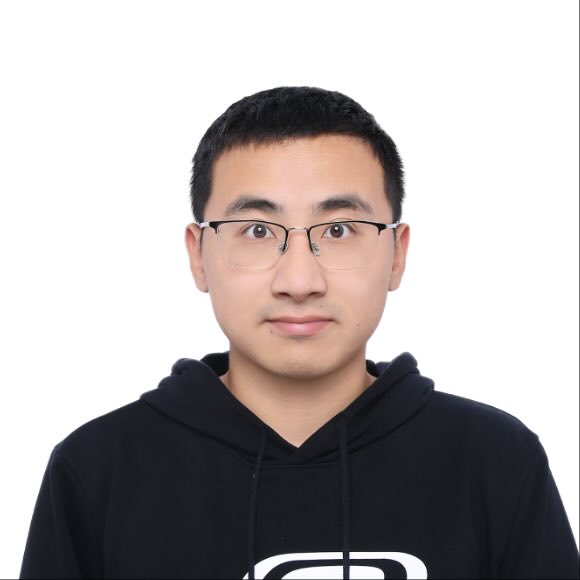
郑康杰照片

郑康杰 欢迎来一起做一些有趣的事情!

博士后研究员 · 桑格研究所(Wellcome Sanger Institute)
青年研究员 · 沃尔森学院(Wolfson College), 剑桥大学
AI for Biology · Genomics · Biomolecules

我致力于构建可扩展的数据驱动型 AI 模型,让机器能够从海量生物组学数据中学习,破译生命的“语言”,并挖掘其中潜藏的生命系统新规律。

关于我

我目前在英国剑桥的 Wellcome Sanger Institute 从事博士后研究,与 Dr. Mo Lotfollahi 合作开发面向大规模生物组学数据的可扩展、可泛化基础模型,捕获基因表达的规律。自 2026 年 1 月起,我同时担任剑桥大学 Wolfson College 青年研究员。 我的研究聚焦于序列数据建模(蛋白质、基因组)与结构数据建模(3D 分子结构)两个部分,致力于实现跨生物模态的一体化理解。 博士期间,我主要研究面向分子建模的基础模型,相关成果构成博士论文 《基于预训练模型的分子建模研究》 的核心内容,并荣获 ACM 北京分会优秀博士学位论文奖。

学术经历

  • 青年研究员 , Wolfson College, 剑桥大学 (2026 年 1 月 – 至今)
  • 博士后研究员, Wellcome Sanger Institute (2025 年 9 月 – 至今)
  • 计算机科学博士, 北京大学 (2020 年 8 月 – 2025 年 6 月)
    导师: 张铭教授
  • 计算机科学学士, 哈尔滨工业大学 (2016 年 8 月 – 2020 年 6 月)
    毕业于哈工大英才学院,并荣获英才学院十佳毕业生。

业界经历

  • 研究实习生, 清华大学智能产业研究院 (2022 年 8 月 – 2024 年 11 月)
    研究方向: 面向蛋白质与药物分子的 AI 建模
  • 研究实习生, 腾讯 AI Lab (2021 年 8 月 – 2022 年 8 月)
    研究方向: 非自回归文本生成
  • 研究实习生, 百度研究院 (2019 年 8 月 – 2020 年 5 月)
    导师: 孙明明教授
    研究方向: 信息抽取

研究亮点

面向单细胞基因调控与统一分子建模的多尺度基础模型。

最新研究

单细胞基因调控模型(MUSS)

整合 DNA 序列、单细胞染色质可及性和基因表达,在多个尺度上建模单细胞基因调控。

NeurIPS 2026

PDF代码

代表研究

全原子蛋白语言模型 (ESM-AA)

理解多尺度分子数据(如药物分子与蛋白质大分子),在蛋白质-分子联合建模任务上达到优异效果。

ICML 2024

代表性论文

* 表示共同一作 · 完整论文列表见 Google Scholar 。

科学智能

  1. MUSS: A Multi-scale and Sequence-based Model for Single-cell Gene Regulation. NeurIPS 2026.
    Kangjie Zheng*, Amirhossein Vahidi*, Liying Jin*, Joseph Clarke, Vijaya Baskar MS, Connor Rogerson, Mengji Zhang, Muzlifah Haniffa, Anshul Kundaje, Mohammad Lotfollahi.
    PDF代码
  2. CrossMol: cross-modal mask-predict pre-training for 3D molecular data. Bioinformatics · 2026.
    Kangjie Zheng, Junwei Yang, Siyu Long, Wei Ju, Wei-Ying Ma, Hao Zhou, Ming Zhang.
  3. ESM All-Atom: Multi-Scale Protein Language Model for Unified Molecular Modeling. ICML 2024.
    Kangjie Zheng*, Siyu Long*, Tianyu Lu, Junwei Yang, Xinyu Dai, Ming Zhang, Zaiqing Nie, Wei-Ying Ma, Hao Zhou.
  4. SMI-Editor: Edit-based SMILES Language Model with Fragment-level Supervision. ICLR 2025.
    Kangjie Zheng, Siyue Liang, Junwei Yang, Bin Feng, Zequn Liu, Wei Ju, Zhiping Xiao, Ming Zhang.
  5. Mol-AE: Auto-Encoder Based Molecular Representation Learning With 3D Cloze Test Objective. ICML 2024.
    Junwei Yang*, Kangjie Zheng*, Siyu Long, Zaiqing Nie, Ming Zhang, Xinyu Dai, Wei-Ying Ma, Hao Zhou.

语言建模

  1. ExLM: Rethinking the Impact of [MASK] Tokens in Masked Language Models. ICML 2025.
    Kangjie Zheng, Junwei Yang, Siyue Liang, Bin Feng, Zequn Liu, Wei Ju, Zhiping Xiao, Ming Zhang.
  2. Towards a Unified Training for Levenshtein Transformer. ICASSP 2023.
    Kangjie Zheng, Longyue Wang, Zhihao Wang, Binqi Chen, Ming Zhang, Zhaopeng Tu.
  3. A Decoding Algorithm for Length-Control Summarization Based on Directed Acyclic Transformers. EMNLP Findings 2024.
    Chenyang Huang, Hao Zhou, Cameron Jen, Kangjie Zheng, Osmar Zaiane, Lili Mou.
    PDF代码
  4. Gloss Matters: Unlocking the Potential of Non-Autoregressive Sign Language Translation. ACM MM 2025.
    Zhihao Wang, Shiyu Liu, Zhiwei He, Kangjie Zheng, Liangying Shao, Junfeng Yao, Jinsong Su.

学术服务与报告

学术服务

程序委员会 / 审稿

  • Conference on Neural Information Processing Systems (NeurIPS’25) — 审稿人
  • International Conference on Learning Representations (ICLR’24, ’25) — 审稿人
  • International Conference on Machine Learning (ICML’24, ’25) — 审稿人
  • AAAI Conference on Artificial Intelligence (AAAI’25) — 审稿人
  • ACL Rolling Review (ACL ARR) — 审稿人

报告与展示

联系我

欢迎来信交流合作、讨论研究,或进一步了解我的工作。

摘要

MUSS: A Multi-scale and Sequence-based Model for Single-cell Gene Regulation

NeurIPS 2026

Kangjie Zheng*, Amirhossein Vahidi*, Liying Jin*, Joseph Clarke, Vijaya Baskar MS, Connor Rogerson, Mengji Zhang, Muzlifah Haniffa, Anshul Kundaje, Mohammad Lotfollahi.

* 共同第一作者。

PDF代码

中文摘要(译文)

对单细胞基因调控进行建模,需要在不同调控尺度上联合表征 DNA 序列、染色质可及性和基因表达。基于序列的模型能够捕捉 DNA 层面的调控语法,但往往缺乏细胞层面的分辨率;许多单细胞组学模型则将基因和染色质可及性峰表示为固定词表中的标记,而不包含其底层序列信息。

在此,我们提出 MUSS,一种基于序列的多尺度单细胞基因调控模型,同时保留 DNA 层面和细胞层面的分辨率。MUSS 使用冻结的预训练序列编码器,从 DNA 中提取峰级和基因级表征,并通过峰与峰之间的自注意力以及带有距离偏置的峰与基因交互来整合这些表征。模型先进行峰的掩码语言建模,再利用配对的 scATAC-seq 和 scRNA-seq 数据训练,使这些表征与细胞特异的调控状态对齐。

在基因表达预测、增强子与基因关联、基于基序的调控优先级排序和零样本细胞聚类任务中,相较于基于序列的模型和单细胞组学基线模型,MUSS 取得了良好的表现。它还能针对任务训练中未见过的基因和可及性峰进行表达预测。这些结果支持使用以序列为基础的多尺度表征来解析细胞类型特异的调控程序。代码、数据集和模型检查点可在以下地址获取:https://github.com/Lotfollahi-lab/MUSS_neurips26。

英文原文 / English original

Modeling gene regulation in single cells requires jointly representing DNA sequence, chromatin accessibility, and gene expression across regulatory scales. Sequence-based models capture DNA-level regulatory grammar but often lack cell-level resolution, whereas many single-cell omics models represent genes and peaks as fixed-vocabulary tokens without their underlying sequence.

Here, we present MUSS, a sequence-based multi-scale model for single-cell gene regulation that preserves both DNA-level and cell-level resolution. MUSS derives peak- and gene-level representations from DNA using a frozen pre-trained sequence encoder and integrates them through peak-peak self-attention and distance-biased peak-gene interactions. Peak masked language modeling followed by training on paired scATAC-seq and scRNA-seq aligns these representations with cell-specific regulatory states.

Across gene expression prediction, enhancer-gene linking, motif-guided regulatory prioritization, and zero-shot cell clustering, MUSS achieves strong performance against sequence-based and single-cell omics baselines. It further predicts expression for genes and peaks unseen during task training. These results support sequence-grounded, multi-scale representations for decoding cell-type-specific regulatory programs. Code, datasets, and model checkpoints are available at https://github.com/Lotfollahi-lab/MUSS_neurips26.

摘要来源:arXiv:2611.08086 · v1

摘要

CrossMol: cross-modal mask-predict pre-training for 3D molecular data

Bioinformatics · 2026

Kangjie Zheng, Junwei Yang, Siyu Long, Wei Ju, Wei-Ying Ma, Hao Zhou, Ming Zhang.

期刊原文代码

中文摘要(译文)

研究动机 面向分子数据的自监督预训练模型已在许多下游任务中取得显著成果。分子固有的多模态属性也推动了从不同模态中获取信息的研究。然而,现有多模态分子预训练模型通常将这些模态视为同等且相互独立的,尽管它们所包含的信息存在差异。三维(3D)分子结构通常包含比简化分子线性输入规范(SMILES)更细粒度的信息,而后者主要刻画较高层次的语义信息,例如分子拓扑结构。

研究结果 我们设计了一种跨模态掩码预测预训练模型 CrossMol,用于捕获信息量不等的模态之间的语义关联。该模型利用另一种模态(如 SMILES)中较高层次的语义信息补全缺失的三维结构。这使其能够学习跨模态关联,并更好地理解细粒度的三维结构信息。我们还引入了重加权的距离预测损失,以改进对短程结构信息的建模。实验表明,CrossMol 在多项分子下游任务中取得了较大的性能提升,达到了最先进的水平。

可用性与实现 源代码和训练数据已在 https://github.com/zhengkangjie/crossmol 公开。代码已归档至 https://doi.org/10.5281/zenodo.19653204。

英文原文 / English original

Motivation Self-supervised pre-training models for molecular data have demonstrated notable results across many downstream tasks. The inherent multimodal properties of molecules have also motivated efforts to capture information from different modalities. However, current multimodal molecular pre-training models usually treat these modalities as equal and independent, despite differences in their information content. Three-dimensional (3D) molecular structures generally contain finer-grained information than the simplified molecular-input line-entry system (SMILES), which primarily captures higher-level semantic information, such as molecular topology.

Results We designed a cross-modal mask-predict pre-training model, CrossMol, to capture semantic associations between modalities with unequal information volumes. The model completes missing 3D structure using higher-level semantic information from another modality, such as SMILES. This allows it to learn cross-modal associations and better understand fine-grained 3D structural information. We also introduce a reweighted distance prediction loss to improve the modelling of short-range structural information. Experiments show that CrossMol achieves large performance gains on multiple downstream molecular tasks, attaining state-of-the-art results.

Availability and implementation The source code and training data are available at https://github.com/zhengkangjie/crossmol. The code is archived at https://doi.org/10.5281/zenodo.19653204.

摘要来源:Bioinformatics

摘要

ESM All-Atom: Multi-Scale Protein Language Model for Unified Molecular Modeling

ICML 2024

Kangjie Zheng*, Siyu Long*, Tianyu Lu, Junwei Yang, Xinyu Dai, Ming Zhang, Zaiqing Nie, Wei-Ying Ma, Hao Zhou.

* 共同第一作者。

PDFOpenReview代码

中文摘要(译文)

蛋白质语言模型已在蛋白质工程领域展现出显著潜力。然而,现有的蛋白质语言模型主要在残基尺度上运行,这限制了它们提供原子层面信息的能力。这一局限使我们无法在同时涉及蛋白质和小分子的应用中充分发挥蛋白质语言模型的能力。本文提出 ESM-AA(ESM All-Atom),一种能够实现原子尺度与残基尺度统一分子建模的新方法。ESM-AA 通过在多尺度语码切换的蛋白质序列上进行预训练,并利用多尺度位置编码捕获残基与原子之间的关系,来实现这一目标。实验结果表明,ESM-AA 在蛋白质–分子任务上超越了以往的方法,充分发挥了蛋白质语言模型的能力。进一步研究发现,通过统一分子建模,ESM-AA 不仅获得了分子知识,还保留了对蛋白质的理解。

英文原文 / English original

Protein language models have demonstrated significant potential in the field of protein engineering. However, current protein language models primarily operate at the residue scale, which limits their ability to provide information at the atom level. This limitation prevents us from fully exploiting the capabilities of protein language models for applications involving both proteins and small molecules. In this paper, we propose ESM-AA (ESM All-Atom), a novel approach that enables atom-scale and residue-scale unified molecular modeling. ESM-AA achieves this by pre-training on multi-scale code-switch protein sequences and utilizing a multi-scale position encoding to capture relationships among residues and atoms. Experimental results indicate that ESM-AA surpasses previous methods in protein-molecule tasks, demonstrating the full utilization of protein language models. Further investigations reveal that through unified molecular modeling, ESM-AA not only gains molecular knowledge but also retains its understanding of proteins.

摘要来源:ICML 2024 · PMLR

摘要

SMI-Editor: Edit-based SMILES Language Model with Fragment-level Supervision

ICLR 2025

Kangjie Zheng, Siyue Liang, Junwei Yang, Bin Feng, Zequn Liu, Wei Ju, Zhiping Xiao, Ming Zhang.

PDFOpenReview代码

中文摘要(译文)

SMILES 是一种重要的分子结构文本表示,作为预训练语言模型(LM)的基础受到了广泛关注。然而,大多数现有的预训练 SMILES 语言模型在预训练时仅关注单个词元层面的监督,未能充分利用分子的子结构信息。这一局限使预训练任务过于简单,阻碍了模型捕获更丰富的分子语义信息。此外,这些 SMILES 语言模型在预训练期间只处理经过破坏的 SMILES 输入,从未接触任何有效的 SMILES,从而导致训练与推理之间的不一致。为应对这些挑战,我们提出 SMI-Editor,一种新颖的基于编辑的预训练 SMILES 语言模型。SMI-Editor 随机破坏分子内的子结构,并将由此得到的 SMILES 输入模型,随后模型尝试通过编辑过程恢复原始 SMILES。这种方法不仅引入了片段层面的训练信号,还允许使用有效的 SMILES 作为输入,使模型能够学习如何从这些不完整的结构中重建完整的分子。因此,该模型展现出更好的可扩展性,以及更强的片段层面分子信息捕获能力。实验结果表明,SMI-Editor 在多项下游分子任务上取得了最先进的性能,甚至超过了若干三维分子表征模型。

英文原文 / English original

SMILES, a crucial textual representation of molecular structures, has garnered significant attention as a foundation for pre-trained language models (LMs). However, most existing pre-trained SMILES LMs focus solely on the single-token level supervision during pre-training, failing to fully leverage the substructural information of molecules. This limitation makes the pre-training task overly simplistic, preventing the models from capturing richer molecular semantic information. Moreover, during pre-training, these SMILES LMs only process corrupted SMILES inputs, never encountering any valid SMILES, which leads to a train-inference mismatch. To address these challenges, we propose SMI-Editor, a novel edit-based pre-trained SMILES LM. SMI-Editor disrupts substructures within a molecule at random and feeds the resulting SMILES back into the model, which then attempts to restore the original SMILES through an editing process. This approach not only introduces fragment-level training signals, but also enables the use of valid SMILES as inputs, allowing the model to learn how to reconstruct complete molecules from these incomplete structures. As a result, the model demonstrates improved scalability and an enhanced ability to capture fragment-level molecular information. Experimental results show that SMI-Editor achieves state-of-the-art performance across multiple downstream molecular tasks, and even outperforming several 3D molecular representation models.

摘要来源:ICLR 2025 Proceedings

摘要

Mol-AE: Auto-Encoder Based Molecular Representation Learning With 3D Cloze Test Objective

ICML 2024

Junwei Yang*, Kangjie Zheng*, Siyu Long, Zaiqing Nie, Ming Zhang, Xinyu Dai, Wei-Ying Ma, Hao Zhou.

* 共同第一作者。

PDFOpenReview代码

中文摘要(译文)

三维分子表征学习受到了广泛关注,并在多种下游任务中取得了良好的表现。近年来的一系列方法采用了一种常见框架:将仅包含编码器的模型与坐标去噪目标相结合。然而,通过一系列分析实验,我们证明,采用坐标去噪目标的纯编码器模型存在预训练目标与下游目标不一致的问题,以及原子标识符受到扰乱的问题。为解决这两个问题,我们提出用于分子表征学习的 Mol-AE,这是一种将位置编码用作原子标识符的自编码器模型。我们还提出了一种名为“三维完形填空”(3D Cloze Test)的新训练目标,使模型能够从真实的分子子结构中更好地学习原子的空间关系。实验结果表明,与当前最先进的三维分子建模方法相比,Mol-AE 取得了大幅性能提升。

英文原文 / English original

3D molecular representation learning has gained tremendous interest and achieved promising performance in various downstream tasks. A series of recent approaches follow a prevalent framework: an encoder-only model coupled with a coordinate denoising objective. However, through a series of analytical experiments, we prove that the encoder-only model with coordinate denoising objective exhibits inconsistency between pre-training and downstream objectives, as well as issues with disrupted atomic identifiers. To address these two issues, we propose Mol-AE for molecular representation learning, an auto-encoder model using positional encoding as atomic identifiers. We also propose a new training objective named 3D Cloze Test to make the model learn better atom spatial relationships from real molecular substructures. Empirical results demonstrate that Mol-AE achieves a large margin performance gain compared to the current state-of-the-art 3D molecular modeling approach.

摘要来源:ICML 2024 · PMLR

摘要

ExLM: Rethinking the Impact of [MASK] Tokens in Masked Language Models

ICML 2025

Kangjie Zheng, Junwei Yang, Siyue Liang, Bin Feng, Zequn Liu, Wei Ju, Zhiping Xiao, Ming Zhang.

PDFOpenReview代码

中文摘要(译文)

掩码语言模型(MLM)在许多自监督表征学习任务中取得了显著成功。MLM 在训练时使用 [MASK] 标记随机掩盖输入序列的部分内容,并学习根据剩余上下文重建原始内容。本文探讨了 [MASK] 标记对 MLM 的影响。

分析研究表明,掩盖标记可能引入语义受损问题,即受损的上下文可能表达多种模糊不清的含义。这一问题也是影响 MLM 在下游任务中表现的关键因素。基于这些发现,我们提出了一种新的上下文增强型掩码语言模型 ExLM。我们的方法扩展输入上下文中的 [MASK] 标记,并对这些扩展状态之间的依赖关系进行建模。

这种增强提高了上下文容量,使模型能够捕获更丰富的语义信息,从而有效缓解预训练过程中的语义受损问题。实验结果表明,ExLM 在文本建模和 SMILES 建模任务中均取得了显著的性能提升。进一步分析证实,ExLM 通过上下文增强丰富了语义表示,并有效降低了 MLM 中普遍存在的语义多模态性。

英文原文 / English original

Masked Language Models (MLMs) have achieved remarkable success in many self-supervised representation learning tasks. MLMs are trained by randomly masking portions of the input sequences with [MASK] tokens and learning to reconstruct the original content based on the remaining context. This paper explores the impact of [MASK] tokens on MLMs.

Analytical studies show that masking tokens can introduce the corrupted semantics problem, wherein the corrupted context may convey multiple, ambiguous meanings. This problem is also a key factor affecting the performance of MLMs on downstream tasks. Based on these findings, we propose a novel enhanced-context MLM, ExLM. Our approach expands [MASK] tokens in the input context and models the dependencies between these expanded states.

This enhancement increases context capacity and enables the model to capture richer semantic information, effectively mitigating the corrupted semantics problem during pre-training. Experimental results demonstrate that ExLM achieves significant performance improvements in both text modeling and SMILES modeling tasks. Further analysis confirms that ExLM enriches semantic representations through context enhancement, and effectively reduces the semantic multimodality commonly observed in MLMs.

摘要来源:PMLR · ICML 2025

摘要

Towards a Unified Training for Levenshtein Transformer

ICASSP 2023

Kangjie Zheng, Longyue Wang, Zhihao Wang, Binqi Chen, Ming Zhang, Zhaopeng Tu.

出版页面代码

中文摘要(译文)

Levenshtein Transformer(LevT)是一种广泛使用的文本编辑模型,它基于编辑操作(删除和插入),以非自回归方式生成序列。然而,由于训练与推理之间存在差异,LevT 的关键修正组件难以训练。通过精心设计实验,我们的研究揭示,由于两个修正模块的训练信号不平衡,删除模块训练不足,而插入模块训练过度。基于这些观察,我们进一步提出一种对偶学习方法,通过向两个修正模块都提供初始输入来纠正训练不平衡,使其与推理过程保持一致。在三个具有代表性的自然语言处理任务上的实验结果表明,所提出的方法具有有效性和普适性。

英文原文 / English original

Levenshtein Transformer (LevT) is a widely-used text-editing model, which generates a sequence based on editing operations (deletion and insertion) in a non-autoregressive manner. However, it is challenging to train the key refinement components of LevT due to training-inference discrepancy. By carefully designing experiments, our work reveals that the deletion module is under-trained while the insertion module is over-trained due to the imbalance training signals for the two refinement modules. Based on these observations, we further propose a dual learning approach that can remedy the imbalance training by feeding an initial input to both refinement modules, which is consistent with the process in inference. Experimental results on three representative NLP tasks demonstrate the effectiveness and universality of the proposed approach.

摘要来源:ICASSP 2023 · 作者海报 · IEEE Xplore

摘要

A Decoding Algorithm for Length-Control Summarization Based on Directed Acyclic Transformers

EMNLP Findings 2024

Chenyang Huang, Hao Zhou, Cameron Jen, Kangjie Zheng, Osmar Zaiane, Lili Mou.

PDF代码

中文摘要(译文)

长度可控的摘要生成旨在将长文本压缩为满足特定长度限制的短文本。以往的方法通常采用自回归(AR)模型,并将长度要求作为软约束,因此并不总能满足这一要求。在本研究中,我们提出了一种基于有向无环 Transformer(DAT)的新型长度可控解码算法。我们的方法允许存在多个合理的序列片段,并预测一条路径将其连接起来。此外,我们提出了一种序列最大后验(SeqMAP)解码算法,对不同的可能路径进行边缘化,从而找到满足长度预算且概率最高的摘要。我们的算法基于束搜索,这也便于引入重排序器以提升性能。在 Gigaword 和 DUC2004 数据集上的实验结果表明,我们的方法在长度可控摘要生成中达到了最先进的性能。

英文原文 / English original

Length-control summarization aims to condense long texts into a short one within a certain length limit. Previous approaches often use autoregressive (AR) models and treat the length requirement as a soft constraint, which may not always be satisfied. In this study, we propose a novel length-control decoding algorithm based on the Directed Acyclic Transformer (DAT). Our approach allows for multiple plausible sequence fragments and predicts a path to connect them. In addition, we propose a Sequence Maximum a Posteriori (SeqMAP) decoding algorithm that marginalizes different possible paths and finds the most probable summary satisfying the length budget. Our algorithm is based on beam search, which further facilitates a reranker for performance improvement. Experimental results on the Gigaword and DUC2004 datasets demonstrate our state-of-the-art performance for length-control summarization.

摘要来源:ACL Anthology · Findings of EMNLP 2024 (PDF)

摘要

Gloss Matters: Unlocking the Potential of Non-Autoregressive Sign Language Translation

ACM MM 2025

Zhihao Wang, Shiyu Liu, Zhiwei He, Kangjie Zheng, Liangying Shao, Junfeng Yao, Jinsong Su.

出版页面代码

中文摘要(译文)

尽管非自回归手语翻译(NASLT)在推理速度方面具有优势,但其模型的翻译质量明显落后于最先进的自回归手语翻译(ASLT)模型。为了缩小这一质量差距,我们利用手语词汇标注(gloss)来挖掘 NASLT 模型的潜力。具体而言,我们提出了一种用于手语翻译(SLT)的手语词汇标注增强 Levenshtein Transformer(GLevT),以手语词汇标注作为初始序列,通过编辑生成文本。特别是,为缓解引入手语词汇标注所导致的 GLevT 训练与推理之间的不一致,我们提出了用于训练的双中心学习策略和基于关键帧的手语词汇标注替换方法,进一步提高 GLevT 的翻译质量。在 CSL-Daily 上的实验表明,GLevT 的 BLEU 和 ROUGE 分数比其他 NASLT 模型高出约 4 分,同时取得与最先进 ASLT 模型相当的性能,并实现了 3.46~5.26 倍的推理加速。此外,我们将 GLevT 扩展到无需手语词汇标注的手语翻译任务,在参数量仅为 4900 万的情况下取得了与最先进大型模型相当的性能。代码已发布于 https://github.com/XMUDeepLIT/GLevT。

英文原文 / English original

While non-autoregressive sign language translation (NASLT) has the advantage in inference speed, the translation quality of NASLT models lags significantly behind that of the state-of-the-art (SOTA) autoregressive sign language translation (ASLT) models. To bridge the quality gap, we exploit glosses to unlock the potential of NASLT models. Concretely, we propose Gloss-enhanced Levenshtein Transformer (GLevT) for sign language translation (SLT), which takes glosses as initial sequences for editing into texts. In particular, to alleviate the inconsistency between training and inference of GLevT, which is introduced by glosses, we propose a dual-centric learning policy and a keyframe-based gloss replacement method for training, further improving the translation quality of GLevT. Experiments on CSL-Daily demonstrate that GLevT outperforms other NASLT models by approximately 4 points in BLEU and ROUGE scores, while achieving performance comparable to the SOTA ASLT models with a 3.46~5.26× inference speed-up. Furthermore, we extend GLevT to gloss-free SLT, achieving performance comparable to SOTA large models, despite having only 49M parameters. We release code at https://github.com/XMUDeepLIT/GLevT.

摘要来源:ACM Multimedia 2025